
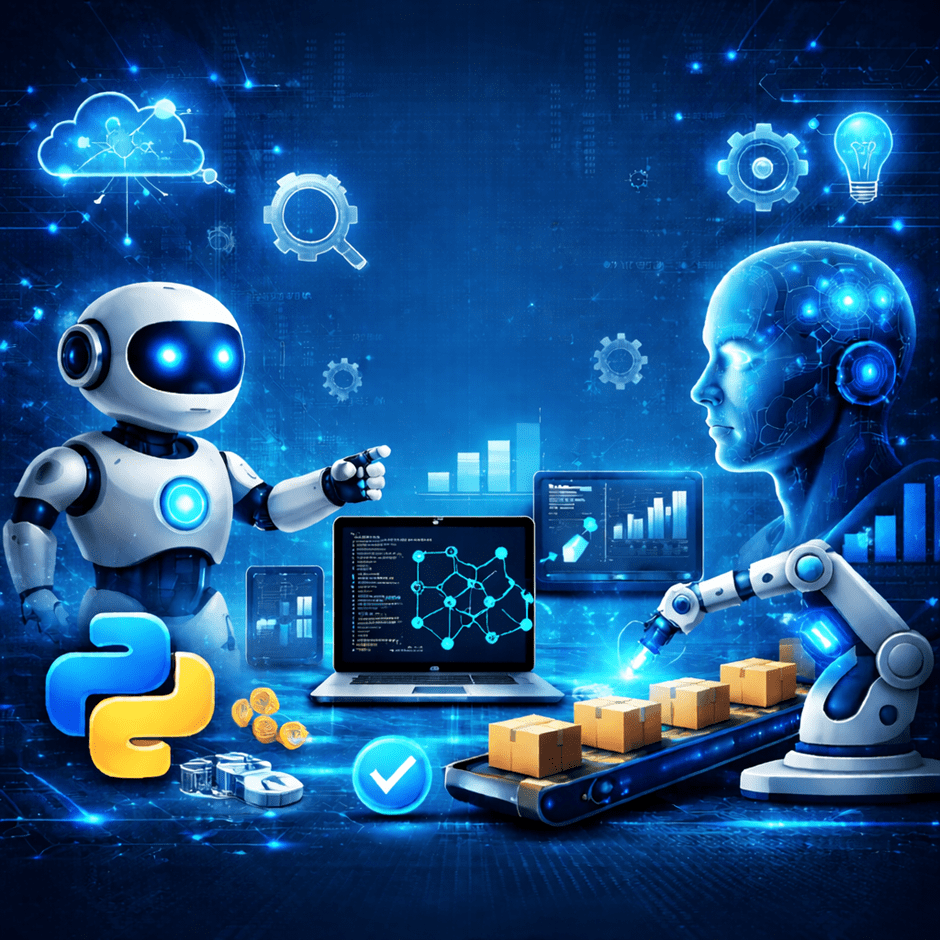
Introduction to Python and AI in Automation:
Python and Artificial Intelligence are transforming automation into a smarter and more efficient process. Traditional automation relied on fixed rules, but with AI integration, systems can now learn, adapt, and make decisions based on real-time data. Python plays a vital role in this transformation due to its simplicity and strong library support. Businesses are increasingly adopting AI automation to streamline workflows, reduce manual effort, and improve productivity. From automating customer service with chatbots to handling large-scale data processing, Python makes AI implementation easier and faster. As industries move towards digital transformation, Python with AI continues to be the foundation of modern automation systems, helping companies stay competitive and innovative in a rapidly evolving market.
Role of Machine Learning in Automation:
Machine learning is a core component of AI automation, enabling systems to learn from data without explicit programming. Python provides powerful tools like Scikit-learn and TensorFlow that simplify the development of machine learning models. These models can analyse patterns, predict outcomes, and automate complex decision-making processes. Python and AI are transforming automation across industries. Today, many learners are choosing a python course in Coimbatore to build strong programming skills. With the rise of AI automation, enrolling in python training in Coimbatore helps students gain practical experience and industry-ready knowledge. For example, businesses use machine learning for demand forecasting, fraud detection, and personalized recommendations. Automation powered by machine learning reduces errors and improves efficiency across industries. Python’s flexibility allows developers to build and deploy models quickly, making it the preferred choice for AI automation projects. As data continues to grow, machine learning with Python will play an even bigger role in shaping intelligent automation solutions.
Popular Python Libraries for AI Automation:
Python offers a wide range of libraries that make AI automation development faster and more efficient. Libraries like TensorFlow, Py Torch, and Kera’s help in building deep learning models, while Pandas and NumPy assist in data processing and analysis. These tools allow developers to handle large datasets and create intelligent systems with ease. Python AI libraries are widely used in automation tasks such as image recognition, speech processing, and predictive analytics. Their open-source nature and strong community support make them accessible for beginners and professionals alike. By using these libraries, businesses can develop scalable automation solutions that improve performance and reduce operational costs. Python for AI continues to evolve, providing new tools that enhance automation capabilities.
Real-World Applications of Python and AI Automation:
Python and AI automation are widely used across various industries to improve efficiency and innovation. In healthcare, AI systems help in diagnosing diseases and managing patient data. In finance, automation is used for fraud detection and risk analysis. E-commerce platforms use AI to recommend products based on user behaviour. Python makes it easier to develop these applications due to its versatility and powerful frameworks. Automation not only saves time but also improves accuracy and decision-making. As businesses continue to adopt digital technologies, the demand for AI automation applications is increasing rapidly. Python with AI enables companies to build intelligent systems that enhance customer experience and operational efficiency.
Benefits of Using Python for AI Automation:
Python is widely preferred for AI automation due to its simplicity, readability, and extensive ecosystem. It allows developers to write fewer lines of code while achieving powerful results. One of the key benefits of Python for AI is its strong community support and availability of open-source libraries. These features make it easier to develop, test, and deploy automation solutions. Python also integrates well with other technologies, making it suitable for large-scale applications. AI automation built with Python helps businesses reduce costs, improve efficiency, and make data-driven decisions. As automation becomes more advanced, Python remains a reliable and scalable choice for developing intelligent systems.
Future Trends in Python and AI Automation:
The future of automation is closely linked with advancements in Python and AI technologies. Emerging trends such as deep learning, natural language processing, and robotic process automation are shaping the next generation of intelligent systems. Python continues to be at the forefront of these innovations due to its adaptability and continuous updates. Businesses are investing heavily in AI automation to gain a competitive advantage and improve operational efficiency. The integration of AI with cloud computing and big data is further enhancing automation capabilities. As technology evolves, Python with AI will play a crucial role in developing smarter, faster, and more efficient automation solutions across industries.
Career Opportunities in Python and AI Automation:
The rise of Python and AI automation has created a high demand for skilled professionals in the tech industry. Roles such as AI developer, machine learning engineer, and data scientist are becoming increasingly popular. Python is a key skill required for these positions due to its widespread use in AI development. Learning Python with AI opens doors to various career opportunities across industries like healthcare, finance, and IT. Companies are looking for professionals who can build and manage automation systems effectively. AI automation jobs offer attractive salaries and growth potential, making it a promising career path for aspiring tech professionals.
The Impact of Python and AI on Automation:
Python and AI are transforming the way automation works by making systems smarter and more efficient. With the ability to learn from data and adapt to changing conditions, AI automation is becoming essential for modern businesses. Python provides the tools and flexibility needed to develop these intelligent systems. As industries continue to adopt automation, the role of Python and AI will only grow stronger. The future of automation lies in creating systems that can think, learn, and evolve. By embracing Python and AI automation, businesses can improve productivity, reduce costs, and stay ahead in the competitive digital landscape.
1 Comment. Leave new
Fast deposits and even faster withdrawals. That is all I really care about and this site delivers. 1pra1bet is a winner in my book.